Affordable real estate in Southern Maine: what the 2026 data showsWith median home prices above $500,000 in many Southern Maine communities, it's easy to assume that affordable real estate has

Dated: April 28 2026
Views: 176
You've decided it's time. You want to buy a home in Maine. But when you think about actually doing it, your mind probably goes somewhere like this:
Mortgages. Interest rates. Credit scores. Down payments. Pre-approval. Offers. Inspections. Title companies. Closing costs. Forms I don't understand.
And that's just the beginning.
The truth is, buying a home for the first time isn't complicated because you're not smart enough to understand it. It's complicated because there are a lot of moving pieces, a lot of people involved, and a lot of decisions that affect your finances and your family for the next 15-30 years.
The good news? You don't have to figure this out alone. And you don't have to become an expert in mortgages or real estate law to buy a home successfully.
What you do need is a roadmap—and someone who knows how to guide you through it.
Here's where to start.

Before you call an agent (yes, before), you need to understand where you stand financially.
This isn't about being perfect. It's about being honest with yourself about three things:
Your credit score. Lenders care about this. A score above 620 means you can qualify for an FHA loan. Above 740 and you're in better shape for conventional financing. But even if your score isn't perfect, you're not disqualified—you just need to know what it means for your options.
Your savings. How much do you have available? This determines your down payment options and what price range is actually realistic for you. In Maine, first-time buyers often think they need 20% down. They don't. But they do need something, and they need to understand what programs might help.
Your debt. Student loans, car payments, credit card debt—lenders look at all of it. They want to understand your debt-to-income ratio. You don't need to pay everything off, but you need to know what you're working with.
Why this matters: You can't make smart decisions about what house to pursue until you know what you can actually afford. And you can't know what you can afford without understanding your financial picture first.
This is where many first-time buyers get stuck. They fall in love with a house, make an offer, and then find out they don't qualify for the mortgage. That's heartbreaking and expensive.
What you need: A conversation with a mortgage lender who will actually listen to your situation and explain your options clearly. Not pressure you. Explain.

Buying a home in Maine isn't a solo sport. You're going to need people around you who know what they're doing.
This is me. Or someone like me—someone who knows the Maine market, knows the local towns, knows what you're getting into. A good agent isn't just someone who shows you houses. A good agent:
Not just a bank. A person. Someone you can actually talk to who explains things in plain English and answers your questions without making you feel stupid. They'll:
This person walks through the house before you commit to it and tells you what's actually wrong (or what might be). They're not trying to kill the deal—they're protecting you from buying a money pit. In Maine, inspections often include checking for:
Unlike Massachusetts, Maine doesn't require an attorney at closing. Instead, you work with a title company. Here's what they do:
Why this matters: Each of these people has a specific job. If any of them don't know what they're doing, your entire process gets derailed. And if they're not communicating with each other, you end up being the one playing telephone between five different people.
What you need: Someone who knows all these people, knows how to coordinate them, and can make sure everyone's on the same page. That's where having an experienced agent matters.
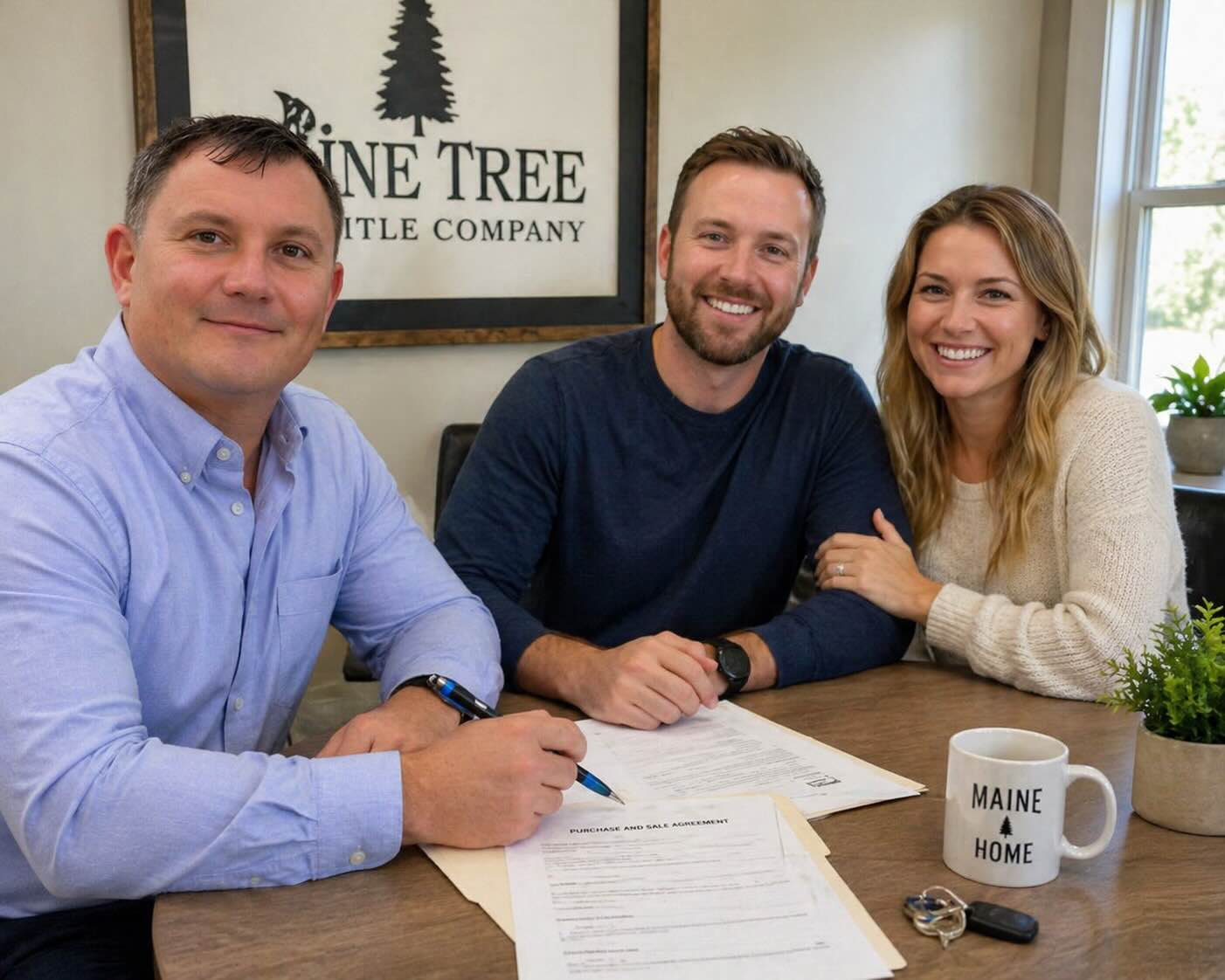
One of the first things you're going to encounter is paperwork. A lot of it.
I give you this form because Maine law requires it. Here's the simple version: Right now, we're just talking. I'm not officially your agent yet — we haven't made that commitment to each other. And that's totally fine. We can still explore options, and I'm happy to answer questions and help you understand how this all works. When you're ready and we decide to work together, you'll sign an exclusive buyer agreement and I officially become your rep. That's when all the legal protections kick in — I keep your info private, I put your interests first, all of that. But for now, this form just lets you know where we stand. No pressure, no weirdness. Just being clear about what the relationship is at this moment.
Once we decide to work together, you'll sign an exclusive buyer agreement. We'll determine the timeframe that works for you — could be 3 months, 6 months, whatever makes sense. Once you sign, I go to work for you as your licensed real estate agent.
This protects both of us. It protects you because I'm legally required to keep your information confidential and put your interests first. It protects me because I'm investing my time helping you. It's not a trap. It's clarity.
Here's what you get: A licensed real estate agent who owes you fiduciary duties — meaning I'm legally required to represent you, negotiate for you, and have your back. That's what this agreement means.
Each of these serves a purpose. And each one will probably confuse you at first.
What you need: Someone who can walk you through each form, explain what it means, and tell you why it matters. Not just hand them to you and say "sign here."
Here's the mistake most first-time buyers make: They start looking at houses before they get pre-approved.
Then they fall in love with a house, make an offer, and find out they don't qualify for the loan.
Don't do this.
Pre-approval means a lender has actually looked at your finances and said, "Yep, we'll lend you up to $X amount." It's not a guarantee, but it's a serious commitment from a lender, and it proves to sellers that you're a real buyer.
(Pre-qualification is different—that's just an estimate based on what you tell them. Pre-approval is based on actual documentation.)
In Maine, there are also down payment assistance programs that first-time buyers often don't know about. Depending on your income and situation, you might qualify for help. But you need to ask the right lender about it.
What you need: To sit down with a mortgage lender before you start house hunting and get a real, honest conversation about what you can afford and what programs you might qualify for.
Want to start browsing? Once you're pre-approved, I can send you curated property searches for the specific areas and price ranges that make sense for you. We'll look at what's actually available so you have a real sense of the market.
When you find a house you want to buy, you don't just hand over cash and get keys.
You write a purchase agreement—a legal document that says, "I offer to buy this house for $X, with these conditions."
Those conditions matter. A lot.
These aren't optional—they're your protection. And yes, waiving them to make a stronger offer is sometimes smart. But not without understanding what you're giving up.
What you need: Someone who understands Maine real estate contracts and can explain what each contingency means before you sign an offer. Not after.
Once your offer is accepted, the next step is usually a home inspection.
In Maine, this often includes more than just the typical inspection. You'll typically also want:
Radon testing. Radon is a naturally occurring radioactive gas that seeps up from the ground into homes. Maine has radon. You need to know the levels. If they're high, it's fixable, but you need to know.
Water quality testing (if the property has a well). If the house isn't on city water, you need to test the well to make sure the water is safe. This is non-negotiable in Maine.
Other stuff that might come up: Septic system evaluation, chimney inspection, energy audit—depending on the house.
What you need: To understand what these tests mean, what the results actually tell you, and what to do if something comes back concerning. Not to freak out—many of these issues are fixable—but to make an informed decision about whether this house is right for you.
Once inspections are done, appraisals are approved, and your lender gives final approval, you're heading to closing.
This is where you actually sign all the paperwork and get the keys.
Your title company coordinates this. They'll:
You'll sign a lot of documents. The two biggest ones:
There will be others—title insurance, disclosure forms, etc.
Closing costs are fees associated with the closing—title insurance, recording fees, lender fees, title company fees. In Maine, these typically run 2-5% of the purchase price. You should get an itemized breakdown at least 3 days before closing so there are no surprises.
What you need: To understand what you're signing and what every line item on your closing statement means. To feel confident that the numbers match what you expected.
Here's something first-time buyers often miss: Where you buy matters just as much as what you buy.
In Southern Maine, you have options:
Each town has different:
Seasonal timing matters too. Spring is busy (more inventory, more competition). Winter is slower (less inventory, but less competition, and homes are cheaper). Fall is in between.
What you need: To understand not just what house you want, but where it should be. And when the market conditions favor you as a buyer.
You've read all this, and you probably feel like you have a better sense of the process. But you also probably realize that there are a lot of decisions to make, a lot of people to coordinate, and a lot of details that matter, and still plenty of questions.
And you're right.
This is exactly why you need an agent.
Not because buying a home is impossible without one. You're smart—you could probably figure most of this out. But because coordinating all these pieces, understanding your options, negotiating on your behalf, and making sure you're protected at every step—that's a full-time job.
That's my job.
Here's what I do for first-time buyers:
You don't have to figure this out alone.

If you're a first-time buyer in Maine and you're ready to buy, or you're just starting to think about it, let's talk.
Schedule a free 20-minute consultation and we can discuss:
No pressure. No sales pitch. Just a real conversation about your situation and what it takes to buy a home in Maine.
How do you prefer to communicate? Email, text, phone call, or Zoom? Let me know what works best for you, and we'll connect however is easiest.
Ready to work with me?
Robert Thibodeau eXp Realty Maine
Call: 207-880-9995
Email: robert.thibodeau@exprealty.com
Website: maineluxurylistings.com
robertthibodeau.exprealty.com
I'm Robert Thibodeau, an Associate Broker with eXp Realty in Southern Maine. I help first-time buyers and experienced investors navigate the Maine market with clarity and confidence.

Southern Maine REALTOR® specializing in residential homes, condos, coastal properties, and second homes across Saco, Biddeford, Old Orchard Beach, Scarborough, and the greater York and Cumberland ....
Affordable real estate in Southern Maine: what the 2026 data showsWith median home prices above $500,000 in many Southern Maine communities, it's easy to assume that affordable real estate has
From Summer to Fall: Refreshing Your Southern Maine Home's Curb AppealAs Labor Day approaches, the shift is already underway. The petunias that looked gorgeous in June are starting to fade. The lawn
Maine's luxury real estate market is having a record-setting 2026. Since January 1st, 1,289 homes have sold for $1 million or more across the state, generating over $2.18 billion in total sales
6 Months Into 2026: What the Data Shows About Southern Maine Home PricesQuick answer: Maine's median home sale price hit $410,000 through the first half of 2026, up 2.5% year-over-year, with 6,122
 Listing data is derived in whole or in part from the Maine IDX and is for consumers' personal, non commercial use only. Dimensions are approximate and not guaranteed. All data should be independently verified ©2026 Maine Real Estate Information System, Inc. All Rights Reserved.